The Gold Coast is built on varied terrain — from flat coastal plains to rolling hinterland hills — and many residential blocks require retaining walls to manage soil levels, create usable flat areas, and prevent erosion. Concrete sleeper retaining walls are one of the most practical and durable solutions for Gold Coast properties. They combine structural strength with a clean, modern appearance, and they handle the region’s heavy rainfall, reactive soils, and subtropical conditions far better than timber alternatives. Concreters Gold Coast designs and installs concrete sleeper retaining walls for residential properties across the region.
What We Offer
Concrete sleeper retaining walls use precast concrete panels (sleepers) stacked between galvanised or powder-coated steel H-beam posts, which are set into concrete footings below ground. This system is versatile, strong, and long-lasting. Our retaining wall services include:
- Standard retaining walls — For managing level changes of up to 1 metre on residential properties. These walls are suitable for garden beds, driveway edges, and gentle slope retention without requiring engineering certification in most cases.
- Engineered retaining walls — For walls over 1 metre in height (measured from the low side), or where soil conditions, surcharge loads, or proximity to structures require a certified design. We work with structural engineers to ensure these walls meet Gold Coast City Council requirements and Australian Standards.
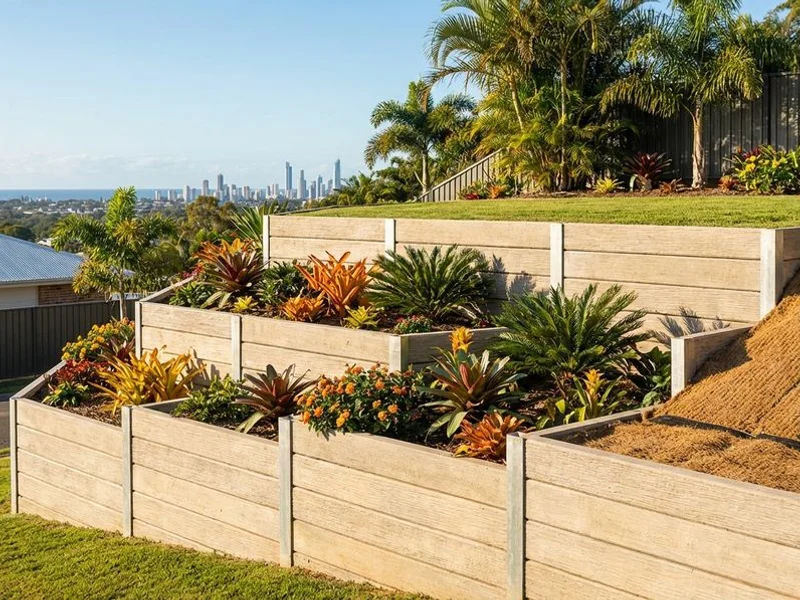
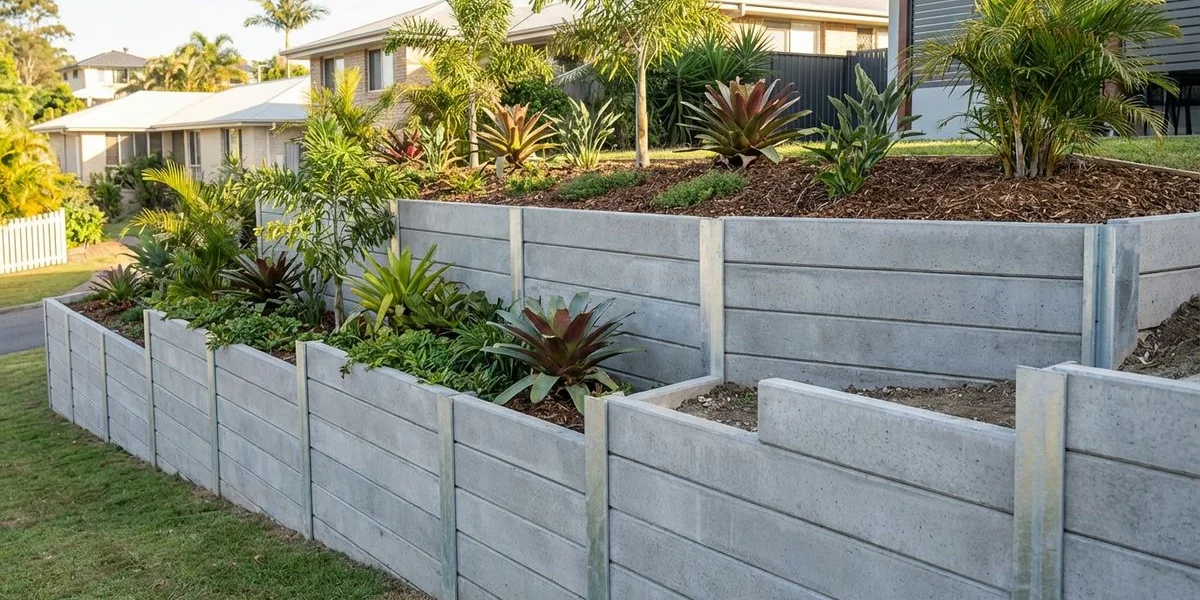
- Tiered retaining walls — Where a single tall wall is not practical or aesthetically desirable, we build stepped or tiered walls that break the height across two or more levels, incorporating garden beds or pathways between tiers.
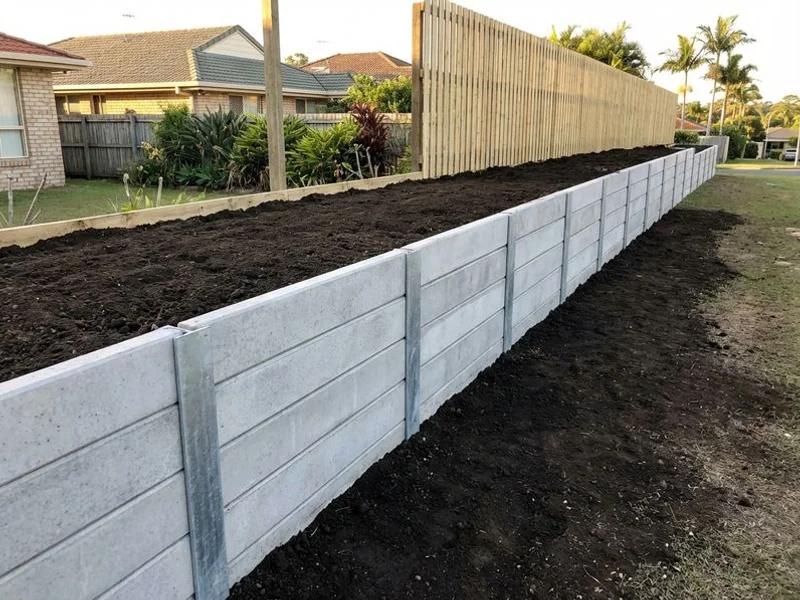
- Boundary walls — Concrete sleeper walls built along property boundaries to retain soil, define property lines, and create clean transitions between neighbouring blocks at different levels.
- Garden bed walls — Low-level retaining walls that create raised garden beds, define landscaping areas, and manage soil around established trees.
Why Concrete Sleepers Over Timber?
Timber sleeper walls were once the default choice for Gold Coast retaining walls, but they come with well-known drawbacks in our climate:
- Timber rots, warps, and degrades in subtropical humidity, particularly when in contact with wet soil
- Termites are a constant threat on the Gold Coast, and timber retaining walls are a prime target
- Treated timber (CCA) raises environmental concerns in garden and food-growing areas
Concrete sleepers are impervious to rot, termites, and moisture. They maintain their shape and strength for decades without treatment or replacement. The upfront cost is moderately higher than timber, but the lifespan and maintenance savings make concrete the better long-term investment.
Our Process
- Site assessment — We visit your property to assess the slope, soil type, drainage conditions, and the required wall height and length. We check for underground services and discuss any council requirements.
- Design and engineering — For walls over 1 metre, we engage a structural engineer to design the wall, specifying post spacing, footing depth, sleeper thickness, and drainage requirements. For standard walls under 1 metre, we design to industry best practice.
- Excavation — Post holes are excavated to the required depth (typically 600mm to 1200mm depending on wall height) using an auger. The footing trench is prepared.
- Post installation — Galvanised steel H-beam posts are set into the holes and concreted in place. Posts are checked for plumb and alignment using string lines and levels. The concrete footings cure before sleeper installation begins.
- Sleeper stacking — Concrete sleeper panels are stacked between the H-beam posts from the bottom up. Each sleeper is checked for level and alignment as it is placed. For taller walls, the sleepers are stacked to the engineered height.
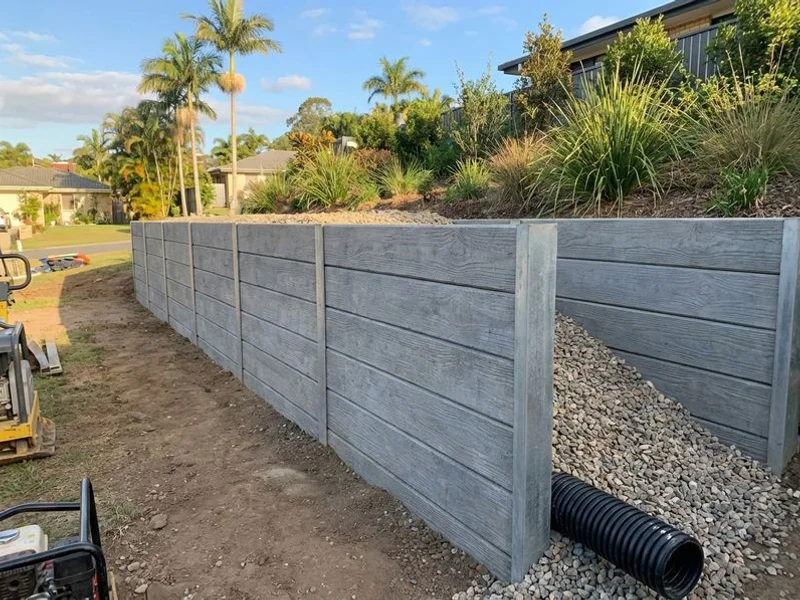
- Drainage — An agricultural drain (ag pipe) wrapped in geofabric is installed behind the wall at the base, along with a gravel drainage blanket. This is critical for Gold Coast conditions — without proper drainage, water pressure builds behind the wall during heavy rain, which is the leading cause of retaining wall failure in our region.
- Backfill and completion — The area behind the wall is backfilled with free-draining material (typically road base or gravel) and compacted in layers. The top is finished with topsoil for garden areas or compacted fill for paved surfaces such as concrete slabs or patios.
Why Choose Us for Retaining Walls
Retaining wall failures are alarmingly common on the Gold Coast, and the cause is almost always the same: inadequate drainage. During the subtropical wet season, intense rain saturates the soil behind the wall, building hydrostatic pressure that pushes the wall outward. Without a properly installed drainage system, even well-built walls can lean, crack, or collapse within a few years, requiring costly concrete repairs.
At Concreters Gold Coast, drainage is not an optional extra — it is a core part of every retaining wall we build. We install ag pipe, geofabric, and gravel drainage layers behind every wall, regardless of height. This approach costs slightly more upfront but prevents the vastly more expensive problem of a failed wall.
Our team also understands the local council regulations around retaining walls. On the Gold Coast, walls over 1 metre typically require a development application and engineering certification. We coordinate with engineers and council requirements so you do not have to navigate the process yourself.
With 20+ years of combined experience across the team, we have built retaining walls on flat coastal blocks, steep hinterland properties, and everything in between. We know the local soil types, drainage patterns, and construction challenges that affect wall performance in this region.
Pricing Guide
Concrete sleeper retaining wall pricing on the Gold Coast depends on the wall height, length, soil conditions, and whether engineering is required:
- Standard walls (up to 1 metre) typically cost between $250 and $400 per linear metre, including posts, sleepers, footings, and drainage.
- Engineered walls (over 1 metre) range from $400 to $700+ per linear metre, with costs increasing for greater heights, difficult access, and complex soil conditions. Engineering fees are an additional cost.
- Tiered walls are priced per tier based on the total height and length of each level.
Factors that influence the price include excavation difficulty (rocky ground, limited access for machinery), the distance from the truck to the wall location, and whether existing walls need to be demolished and removed first. If your project also involves pouring a slab behind the retaining wall, see our concrete slab cost guide for additional budgeting information.
For an accurate quote on your retaining wall project, contact us for a free on-site assessment. We will inspect the site, discuss your requirements, and provide a clear, detailed price.