Concrete Resurfacing vs Replacement: Which Option Saves You More?
Compare concrete resurfacing and full replacement to determine which option is more cost-effective for your Gold Coast property. Includes cost breakdowns and when each makes sense.
Daniel Mercer
Resurfacing or Replacing: Making the Right Call
We see it often. You look at your driveway or patio and wonder if the cracks mean the end of the road for the slab.
It is a tough spot to be in because the price difference between fixing it and wrecking it is huge.
The right choice usually comes down to what is happening beneath the surface rather than just what you see on top.
We have handled hundreds of these projects across the Gold Coast.
This guide breaks down the real costs, the structural warning signs, and the smartest play for your budget.
What Is Concrete Resurfacing?
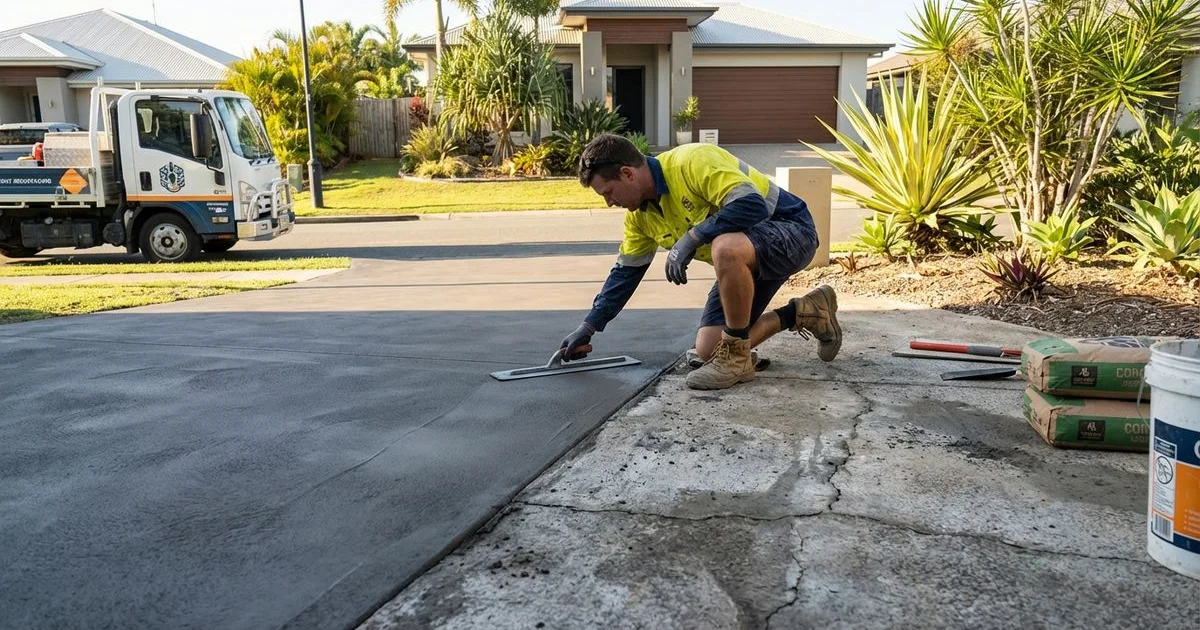
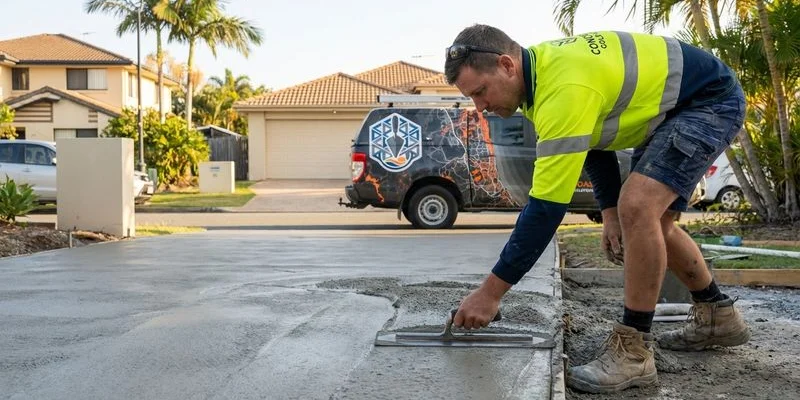
Concrete resurfacing involves applying a new, durable surface layer over your existing slab. We bond a high-strength, polymer-modified overlay to the prepared concrete rather than digging it up.
This layer is typically 3mm to 15mm thick depending on the product used.
A key advantage here is the ability to adjust safety ratings.
We can mix in specific grit additives to achieve an R10 or R11 slip rating, which is essential for pool surrounds under Australian Standards (AS 4586).
Common resurfacing methods used locally include:
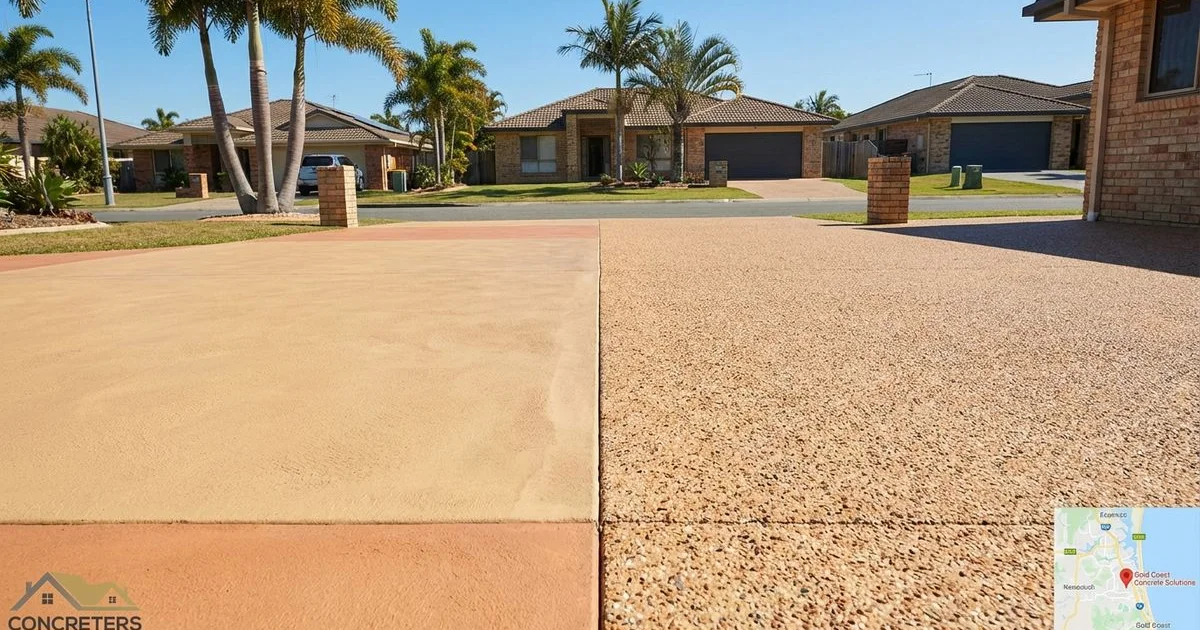
- Spray-on concrete: This is a textured polymer-modified overlay often referred to as “Covacrete” or stencil crete.
- Micro-topping: We use this to achieve a thin, smooth decorative finish that looks like burnished concrete.
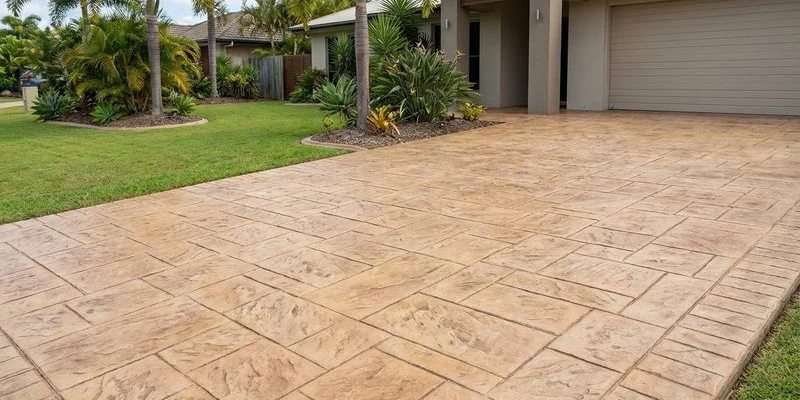
- Stamped overlay: This replicates the texture and depth of pavers, stone, or brick without the weeds.
- Epoxy flooring or polyurethane coatings: These provide chemical resistance for garage floors and withstand hot tyre pickup.
What Does Replacement Involve?
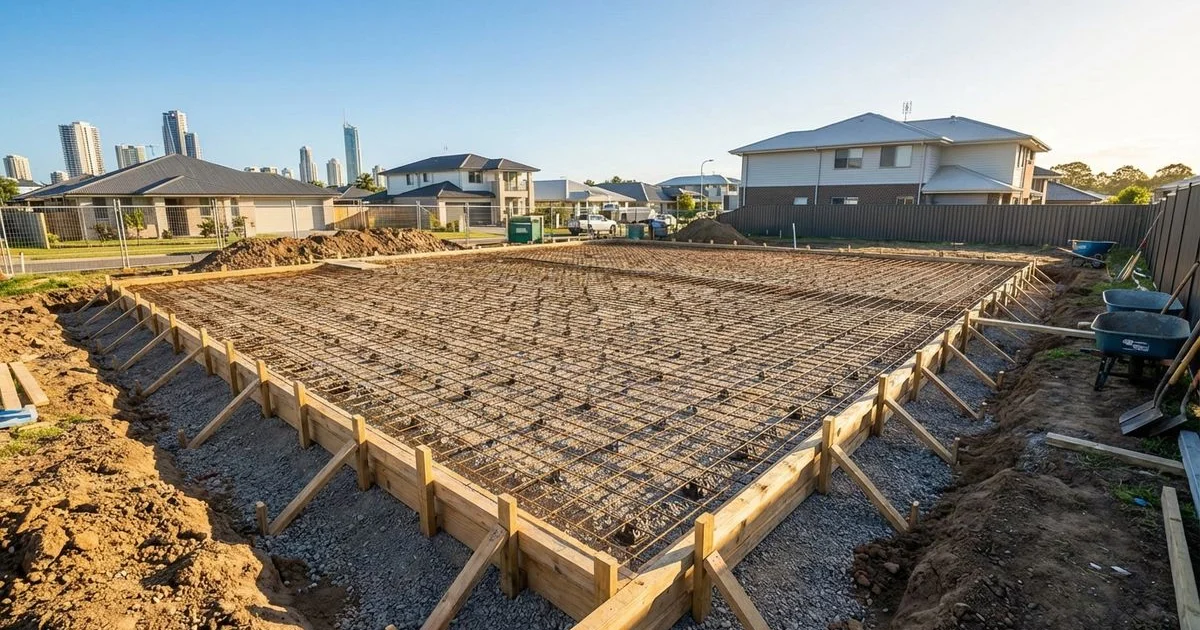
Full replacement is a major construction project.
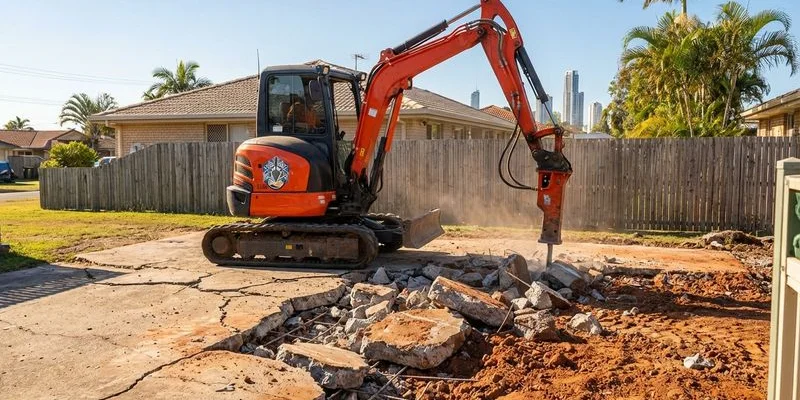
We have to demolish the existing slab, haul away tonnes of heavy waste, regrade the sub-base, and pour fresh concrete.
It is the only way to fix issues that sit deep in the ground.
Current standards for residential driveways typically require a minimum strength of N25 (25MPa) concrete.
For coastal homes exposed to salt air, we often recommend upgrading to N32 (32MPa) marine-grade concrete to prevent future corrosion of the steel mesh (concrete cancer).
The process requires heavy machinery and careful site management.
Cost Comparison
The financial gap between these two options is usually the deciding factor for homeowners.
Material costs for concrete have risen sharply in Queensland over the last two years.
We have also seen disposal fees increase due to the Queensland Government waste levy, which impacts the removal price of old concrete.
Resurfacing Costs (Gold Coast)
- Spray-on concrete: $45-$80 per square metre
- Decorative overlay: $65-$110 per square metre
- Epoxy coating: $55-$95 per square metre
Replacement Costs (Gold Coast)
- Plain concrete (N25): $75-$95 per square metre
- Coloured concrete: $85-$120 per square metre
- Exposed aggregate: $110-$160 per square metre
- Plus demolition: $20-$40 per square metre (depends on access)
- Plus disposal: $15-$25 per square metre (tipping fees)
The Price Breakdown
For a standard double concrete driveway (approx. 60 square metres), the difference is clear.
| Option | Estimated Total Cost |
|---|---|
| Spray-on Resurfacing | $2,700 - $4,800 |
| Decorative Overlay | $3,900 - $6,600 |
| Plain Concrete Replacement | $6,600 - $9,600 |
| Exposed Aggregate Replacement | $8,700 - $13,500 |
Resurfacing typically costs 40 to 60 per cent less than full replacement.
You keep the cash in your pocket because you are not paying for excavation machinery, dump trucks, or landfill fees.
When Resurfacing Makes Sense
We recommend this path when the foundation is solid but the face is ugly.
The Slab Is Structurally Sound
The “soundness” of concrete is not a guess. We verify this using a hammer test or chain drag to listen for hollow sounds, which indicate delamination (separation of layers). If the concrete rings solid and is level, it is a perfect candidate for an overlay.
Surface Damage Is Cosmetic
Spalling (flaking surface) is common in our region due to salt attack. Provided the spalling is less than 20mm deep and has not exposed the steel reinforcement, concrete repair products like Dulux Avista or similar repair mortars can fill these voids effectively.
You Want a New Look
Trends change. Many homes built in the 90s have terracotta-coloured stencils that look dated today. We can apply a modern “French Grey” or “Charcoal” overlay that completely masks the old pattern without removing a single chunk of concrete.
Budget Is a Priority
Saving $5,000 on a driveway allows you to allocate those funds elsewhere. We often see clients use the savings to upgrade their landscaping or install new fencing, which improves the overall street appeal more than a brand-new slab would.
You Need Minimal Disruption
Time is money. A resurfacing crew is usually in and out within 2 to 3 days. Replacement projects can leave you parking on the street for over a week while the new slab cures enough to bear the weight of a vehicle (typically 7 days for light traffic).
When Replacement Is Necessary
Sometimes a fresh start is the only safe option.
We will never put a warranty on a resurfacing job if the underlying slab is failing.
Structural Damage Is Significant
Cracks wider than 3mm that run through the entire depth of the slab are a dealbreaker. These are often “working cracks” that expand and contract with temperature. If we spray over them, the movement will tear the new coating apart within months.
The Slab Has Sunk or Shifted
Tree roots are a major culprit here. Fig trees and palms on the Gold Coast are notorious for lifting slabs or sucking moisture out of the clay, causing subsidence. We have to rip out the concrete to cut the roots and re-compact the sub-base material.
Thickness Is Inadequate
We sometimes find older driveways that are only 70mm to 80mm thick. Modern passenger vehicles and delivery trucks are heavy. If the slab is too thin for the load, it will snap. Adding 3mm of coating does not increase structural strength.
Drainage Needs Correction
Water pooling against your house foundations is a serious risk. Resurfacing follows the existing contours of the ground. We must remove the slab to alter the levels and ensure water flows to the stormwater drains properly.
The Slab Is Over 30 Years Old
Concrete has a lifespan. Carbonation eventually reaches the steel reinforcement, causing it to rust and expand. If we see rust stains bleeding through multiple areas, the “cancer” is likely too advanced to patch.
Longevity Comparison
You need to know how long your investment will last.
Different materials age differently under the Queensland sun.
- Spray-on resurfacing: Lasts 8-15 years. The key is resealing every 2-3 years with a quality acrylic sealer.
- Decorative overlay: Lasts 10-15 years. These are harder wearing but still rely on the bond to the old slab.
- Full concrete replacement: Lasts 25-40 years. A properly cured N32 slab is a generational asset.
Resurfaced areas rely heavily on the sealer.
We find that solvent-based sealers provide better UV protection here than water-based options, preventing the colour from fading too quickly.
Making Your Decision
This is a big call, so let’s simplify the process.
Follow this framework to rule out the wrong choice immediately:
- Check the cracks: If you can fit a 20-cent coin in the crack, you likely need replacement.
- Check the sound: Tap the surface with a hammer. A hollow “thud” means the top is peeling off and needs removal.
- Check the regulations: In Queensland, any building work over $3,300 (including labour and materials) requires a QBCC-licensed contractor.
- Get a dual quote: Ask us to price both options.
Seeing the numbers side-by-side often clarifies the value.
The Bottom Line
Concrete Resurfacing vs Replacement: Which Option Saves You More?
Resurfacing is the clear winner for savings if your concrete bones are good.
It keeps thousands in your bank account and updates your home’s look in days.
Replacement is the necessary investment when the structure has failed.
We focus on giving you the facts so you don’t throw good money after bad concrete.